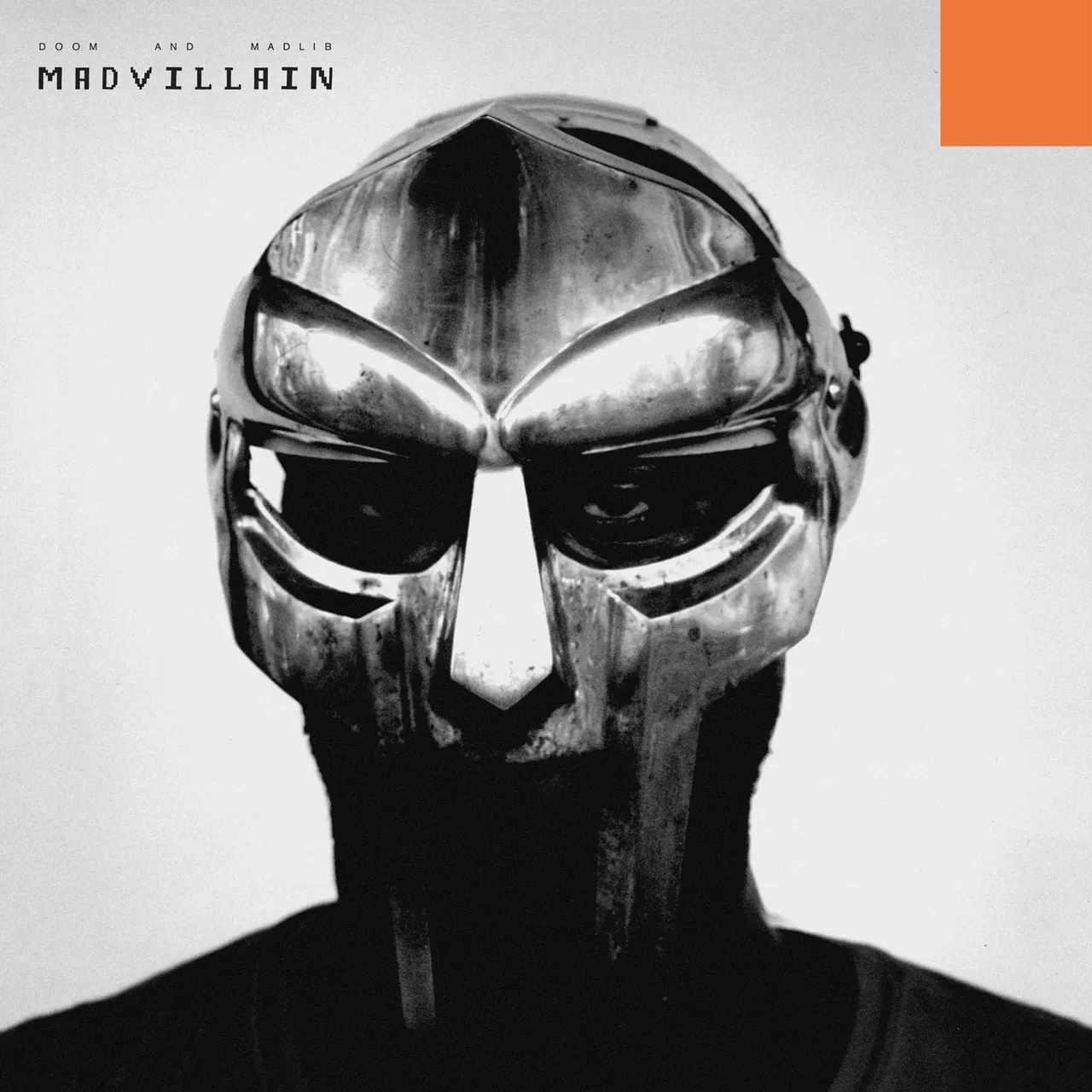
The Art of the Mask
"A visual always brings a first impression. But if there's going to be a first impression I might as well use it to control the story. So why not do something like throw a mask on?”
controlling the story
Music has always been where I find the sharpest hits of inspiration. It’s where my instincts kick in — where something raw and electric starts to move. Where rhythm turns into color. Where a feeling becomes a visual.
I was raised on a piano, learning to play before I even understood what music really was. It was drilled into my hands before I had a concept of a tracklist, before I even knew music came in albums.
But before I ever knew what an album was, I was drawn to the old school vinyl covers. The weird things you'd find at a garage sale you'd been dragged to as a kid. Obscure, experimental, visually insane. Bold type, surreal compositions, cryptic themes. They told stories before I even dropped the needle. That love of visual chaos eventually pulled me deeper & into the worlds those covers hinted at. Underground hip-hop albums that weren’t just music, but full-on concepts. Comic book narratives. Collage-style production. Raw artistry threaded through storytelling, metaphors and structure. Sounds that weren’t polished for mass consumption but crafted with grit, detail, love and imagination.
That’s where I found MF DOOM. The man in the metal mask wasn’t just a rapper. He was a walking concept piece. A sonic graphic novel. A masked designer of sound and silence. And he built his entire body of work around the idea that the art — when done right — should speak louder than the artist ever could.
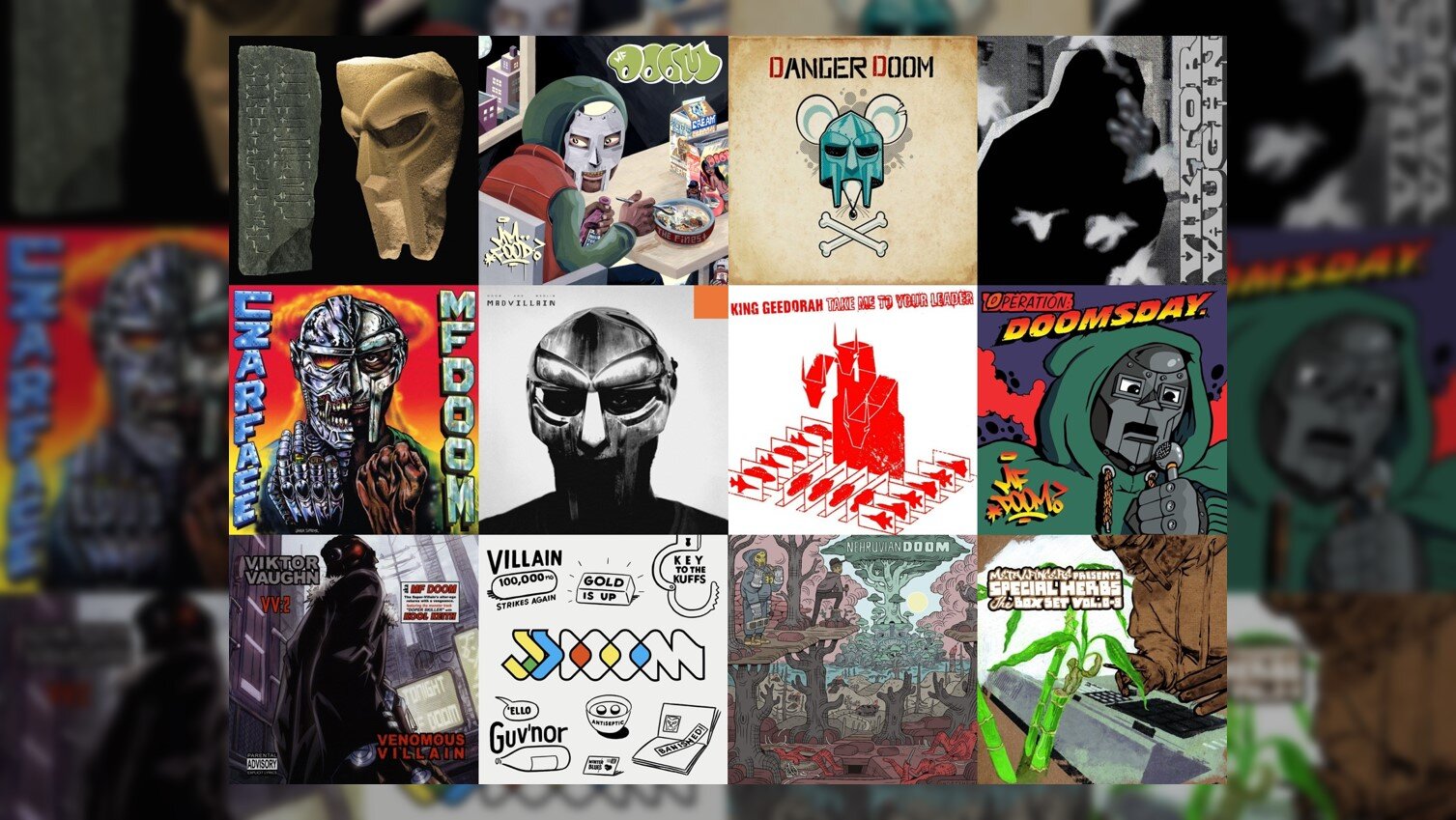
The Genius in the Glitch
DOOM’s tracks weren’t clean. They crackled. Warped. Clipped. And that wasn’t a flaw — it was the fingerprint. He treated hiss and hum like vintage textures from an old printer or fax machine. Sound as visual language. The imperfection wasn’t just aesthetic — it was essential. He pulled samples from dusty cartoons, VHS tapes, obscure soul records, sci-fi deep cuts—layering chaos until it became clarity. His production sounded like zines looked: rough, collage-heavy, full of noise and narrative. A cut-and-paste beat with a snippet of a villain monologue felt like it belonged in the same world as an underground film poster or risograph print—scrappy, brilliant, undeniably unique. And that made the tracks feel alive. Human. Handmade. Every misaligned loop was intentional. Every stutter was part of the swing. He wasn’t trying to sound modern. He was building an aesthetic rooted in the messy, tactile, analog chaos of the past — and then re-engineering it into something that felt ahead of its time.
2004: The Year DOOM Took the Crown
In 2004, MF DOOM released three monumental projects: MM..FOOD, Viktor Vaughn: Venomous Villain, and the now-legendary Madvillainy with Madlib. It was a year that redefined not just his career, but the entire shape of underground hip-hop. Madvillainy, in particular, became something mythic. A cult classic turned canonical. A masterclass in restraint and density. At just over 45 minutes, it packed more lyrical complexity, sonic layering, and conceptual depth than most double albums.
Madlib’s dusty, chopped-up production met DOOM’s compressed, elusive verses in a way that felt like jazz, punk, and comic books all smashed together. No hooks, no filler — just idea after idea, flipping past like panels in a graphic novel. For many, myself obviously included, Madvillainy isn’t just a great album — it’s the album. A blueprint for what hip-hop could be when freed from commercial pressure.It's the sound of two artists pushing form for the sake of form, embracing weirdness, and building their own universe without asking for permission. It broke all the rules, and in doing so, wrote new ones.
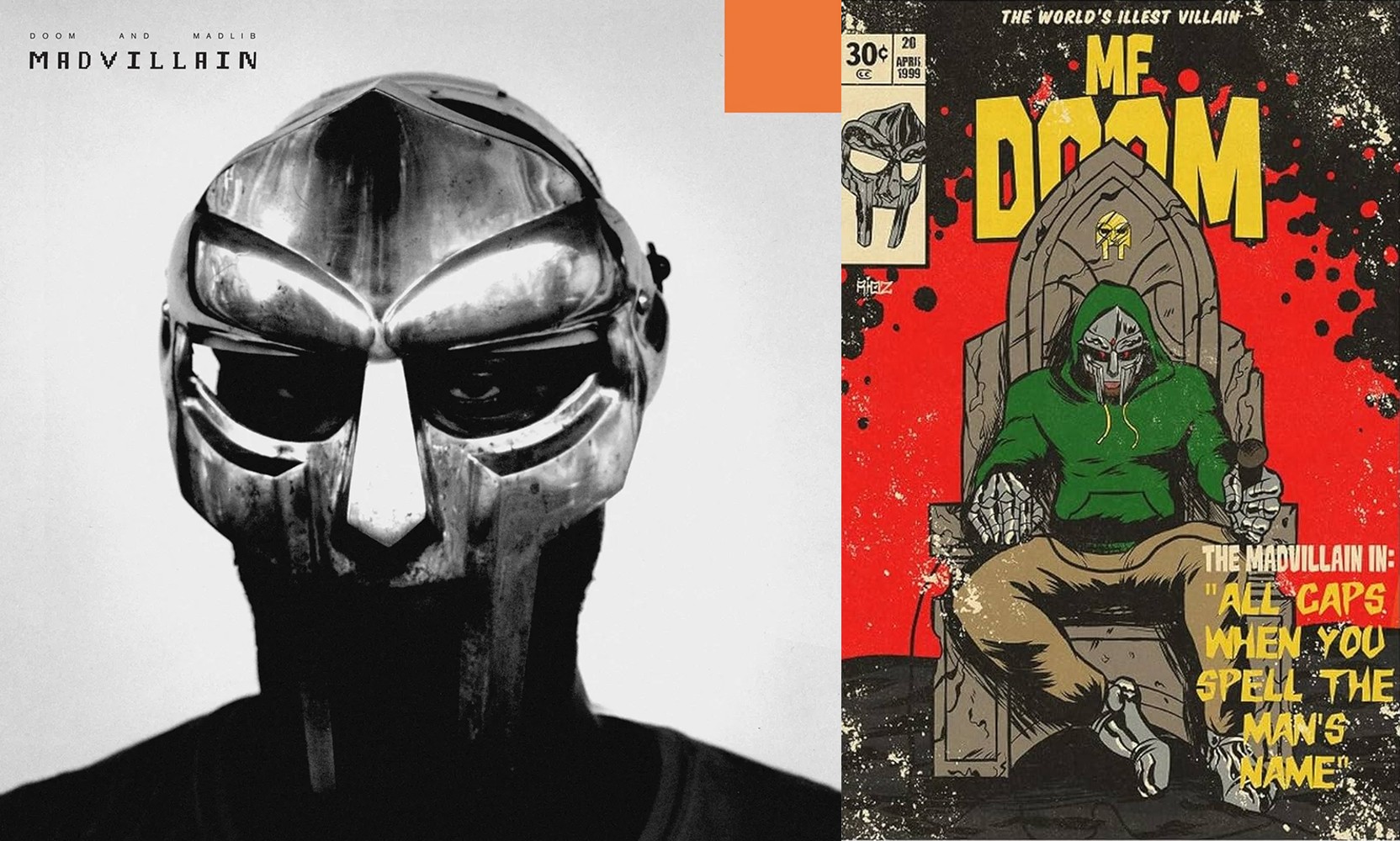
lyricism as layout
You could teach a typography class on DOOM’s verses. The spacing. The flow. The rhythm. There’s a layout to the way he crafted his words; like he was stacking syllables the way Swiss modernists stacked letterforms. Seriously.
Go discover 'that's that'. Each line was built, not just written. His rhymes were dense. His wordplay required decoding. His references were buried deep — layered and obscure like a design system only he could navigate. Each track was its own puzzle, its own tightly gridded system of meaning. Every line snapped into the next with measured precision, but always carried an unpredictable, off-kilter swing.And layered into all that lyrical density was the persona — the villain. The mad scientist. The outcast with bars sharper than any hero's sword. The mask didn’t just hide him. It amplified him. It gave his rhymes context, menace, swagger. It allowed him to speak from a place beyond ego — from a character, from a myth.
What made DOOM so singular wasn’t just the rhymes, but the world-building around them. Each alias, each album, each beat felt like a chapter in a fractured epic. He was crafting something far beyond music, and creating an entire mythology; stitched together with pop culture scraps, comic book lore, and poetic chaos. It was vivid, conceptual, and relentlessly creative. Artistry that knew no bounds and respected no rules. He didn’t waste space. He didn’t waste sound. He composed with restraint and attack. He approached writing like a form of layout. Less about showing off, more about designing something that would hit you in layers.
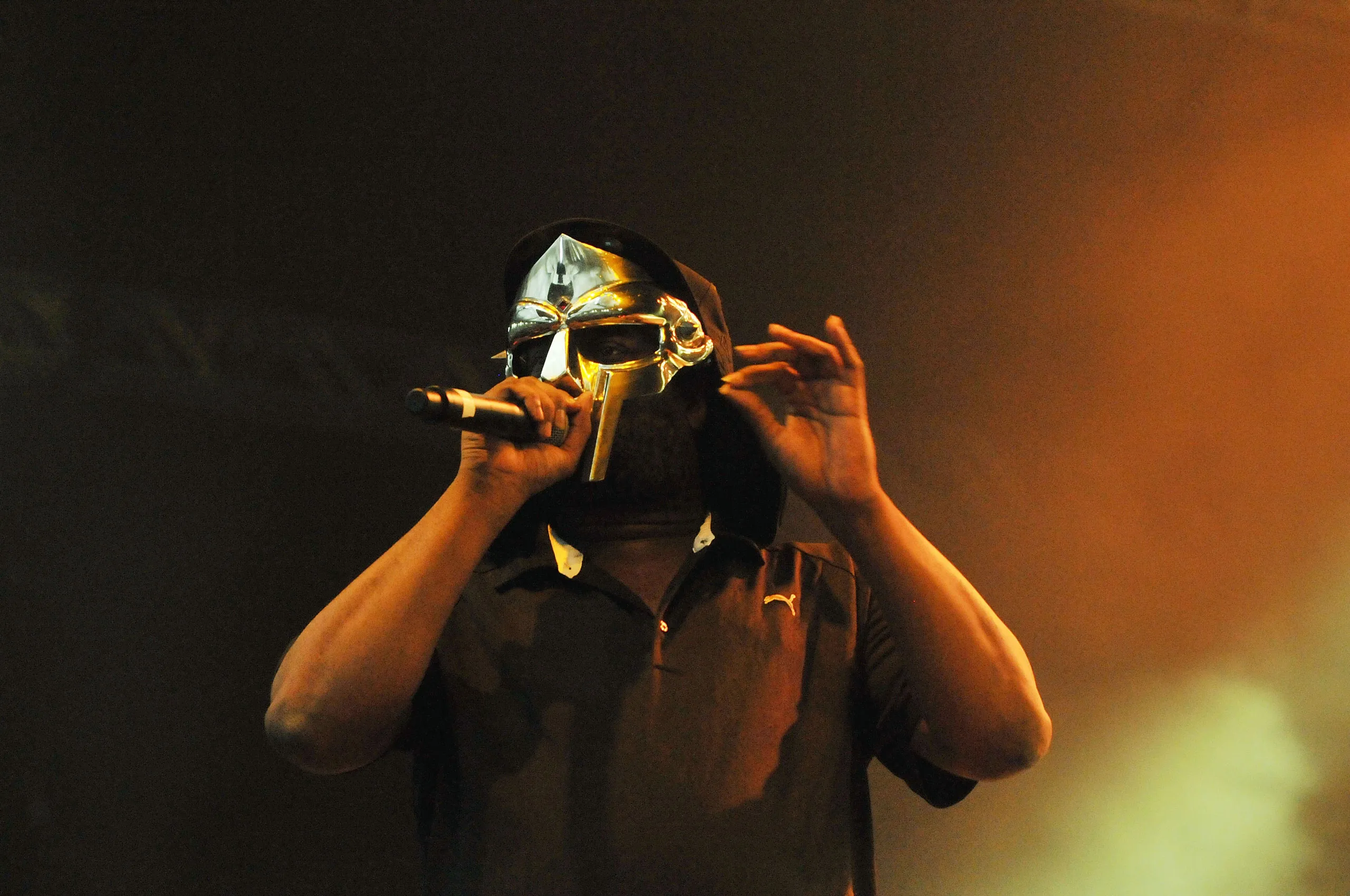
the mask as a medium
That wasn’t just DOOM flexing, It was a manifesto. MF DOOM's mask wasn’t just a prop for a show, it was a character transformation, a villain putting on an outfit. A symbol pulled straight from the margins of comic books and repurposed as a weapon in the world of sound and story. His character wasn’t an act —it was a meticulously designed layer of meaning that turned every album, every verse, into a piece of conceptual art. He was the villain,but he was also the narrator, the author, the designer of his own mythos.
In that way, DOOM tapped into something deeper than music. He mirrored the techniques of street artists — anonymous, ever-present, making meaning in the shadows, and the most raw expression of art. His persona functioned like graffiti: defiant, stylized, coded. You couldn’t pin him down because he never wanted to be found. He became part of the same lineage as masked wrestlers, Banksy tags, bootleg cd's you burnt with ya mates, and posters advertising gigs whacked up on a pole in the dead of night; art that exists both inside and outside the mainstream. Always challenging the surface.
His character blurred into his art so thoroughly that separating the two was impossible. That’s what made it genius. And that’s what gave it permanence. The mask made us, as a listener, focus on the art, not the artist. But so much more than that. It became part of the art. The mask was branding. It was a narrative. It was layout. It told you everything and nothing at once. It created mystery and meaning. It shifted the power dynamic between artist and audience. It was both a hiding place and a billboard.
Just like a perfect cover design.
mediums blur. meaning sharpens
DOOM’s legacy isn’t just hip-hop. It’s visual culture. It’s design. It’s the way a sample can feel like a brushstroke, or a verse like a frame from a storyboard. His influence stretches beyond album covers and stage names. You see it in streetwear. In illustration. In collage art. In the resurgence of lo-fi aesthetics across digital design.
His work lives in that weird space between formats: audio that feels visual. Visuals that feel like sound. A universe built from deep references, DIY ethics, and absolute commitment to the bit. Every element was part of the design. Nothing was thrown in. Everything mattered.
Print design taught us that form follows function. DOOM showed us that form is function—especially when the form wears a mask. That’s where the magic lives. What DOOM left us isn’t just a catalog. It’s a way of making. A way of bending genre, expectation, format. A reminder that the best work doesn’t fit inside clean templates or systems that conform.
The goal isn’t to copy his sound or his look. The goal is to work like he worked: with intention. With depth. With layers. With mystery. With rawness. With soul. The art world, the design world, and the music world aren’t separate. They never were.
DOOM's work has echoed across mediums — through poster design, animation, experimental print, even UI. You can see his fingerprint in places that have nothing to do with rap, but everything to do with art. Because when an artist commits that deeply to the story and their craft to the aesthetic — no matter the medium — it resonates. That’s what real influence looks like. It’s not nostalgia. It’s a living, breathing method. Passion, pressed to wax. And that passion is what links every great work of art—whether it’s found in a verse, a layout, or the space between both.
GET IN TOUCH
I'm always looking to work with passionate organisations & individuals.